Dear Brand, all I want for Christmas is no AI
The Christmas ad season is here.
John Lewis and the supermarkets are loading their tinsel cannons. Over the next few weeks suspect we’ll get the usual volley of talking animals, celebrity cameos and tear-jerkers.
Every year there’s massive pressure on brands and their agencies to deliver a showstopper.
This year there’s an extra one: did they cheat Christmas by using AI?
Audiences have now learned to spot slop in a heartbeat, and they say so. I suspect this is going to shape what agencies offer up this year.
Not so long ago, some brands couldn’t wait to tell you they were using AI. In 2024 Coca-Cola proudly remade “Holidays Are Coming”, the iconic truck ad that’s run in some form since 1995, entirely with AI, and the reaction was brutal: “soulless,” “creepy,” a dystopian version of a well-loved ad.
Others noted it was ironic coming from a brand that dined out for decades on a slogan that you can’t beat ‘the real thing’.
You’d think that would be that. Instead Coca-Cola did it again in 2025, working with AI studios to churn out tens of thousands of clips in a month. The visuals were cleaner; the response wasn’t. Plenty of punters said they might switch to Pepsi.
In the latter half of 2026 brands want you to know that humans made the ad: and they’ve shot a four-minute, behind-the-scenes film to prove it.
Take Oura.
Its latest ad is a city built for hands — tiny streets, working train lights, little showers pumping real water, and fourteen hand-dancers striding through it like commuters.
Thirty-five model makers in Prague spent three weeks building twelve sets for a film about a smart ring, and the brand made a point of telling everyone it used no AI at all.
De’Longhi turned its coffee machines into the world’s smallest coffee shops.
Working with LOLA Madrid, it had model-maker Simon Weisse (the man behind the miniatures in The Grand Budapest Hotel) hand-build tiny café fronts inspired by Milan, Tokyo, Paris and Copenhagen, each one engineered to brew a cup.
The models were shown at Milan Design Week.
Back in the summer, Lucky Generals rebuilt Virtual Insanity’s spinning room for Beefeater 0.0 by hand: nine practical sets, hard, human creative graft.
Over recent months, “a person made this” went from assumed to worth saying out loud.
It’s not just the ad industry.
Etsy’s festive trend report for 2026 – compiled from its own search and sales data has named “Mark of the Maker” one of the season’s defining shifts: shoppers actively hunting for visible brushstrokes, hand-stitching and uneven edges as proof a human made the thing. Searches for hand-painted items are up 280%, hand-woven up 230%, hand-thrown ceramics up 150%.
As Etsy’s trend editor Mandy Lee puts it, it’s “the imperfect human elements that make these items so special.”
Let’s be clear about what’s being objected to here, because it isn’t “digital.”
Nobody boycotted CGI. Nobody minded a bit of Photoshop, or retouching, or a VFX house spending 6 months on a dragon. Those were understood as tools in human hands.
Generative AI gets a different response because it’s seen to do the opposite; to replace the hands, the crew, the illustrator and the set-builder, and to do it by hoovering up their skill and craft without asking or paying.
Which is why human-made carries new weight: it’s expensive, and it’s a commitment.
The Oura city took 35 people, three weeks.
Worth noting who’s trying hardest here — it’s big tech. Oura, Apple TV, Apple Music: the companies built on software, going to enormous lengths to show you the human hand.
Apple Music’s new identity was made by playing notes through a bath of oil and filming the ripples, with a companion film documenting every fiddly month of it. Apple TV hand-built its glass logo and lit it for real.
Both campaigns delivered by TBWA\Media Arts Lab.
None of that is the cheap option. The cost, the labour and the love of craft is the message.
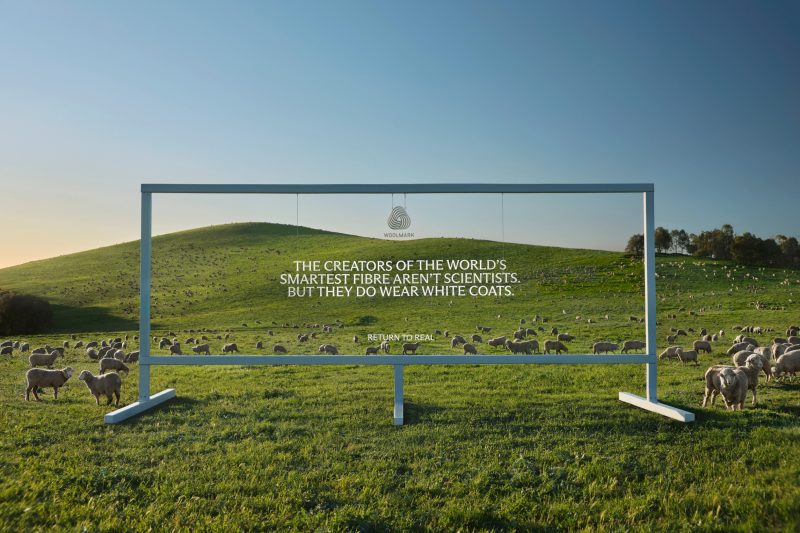
According to a Gartner study half of US consumers now say they prefer brands that steer clear of generative AI, which makes “no AI” something close to the “organic produce” of advertising material.
A label you can charge for.
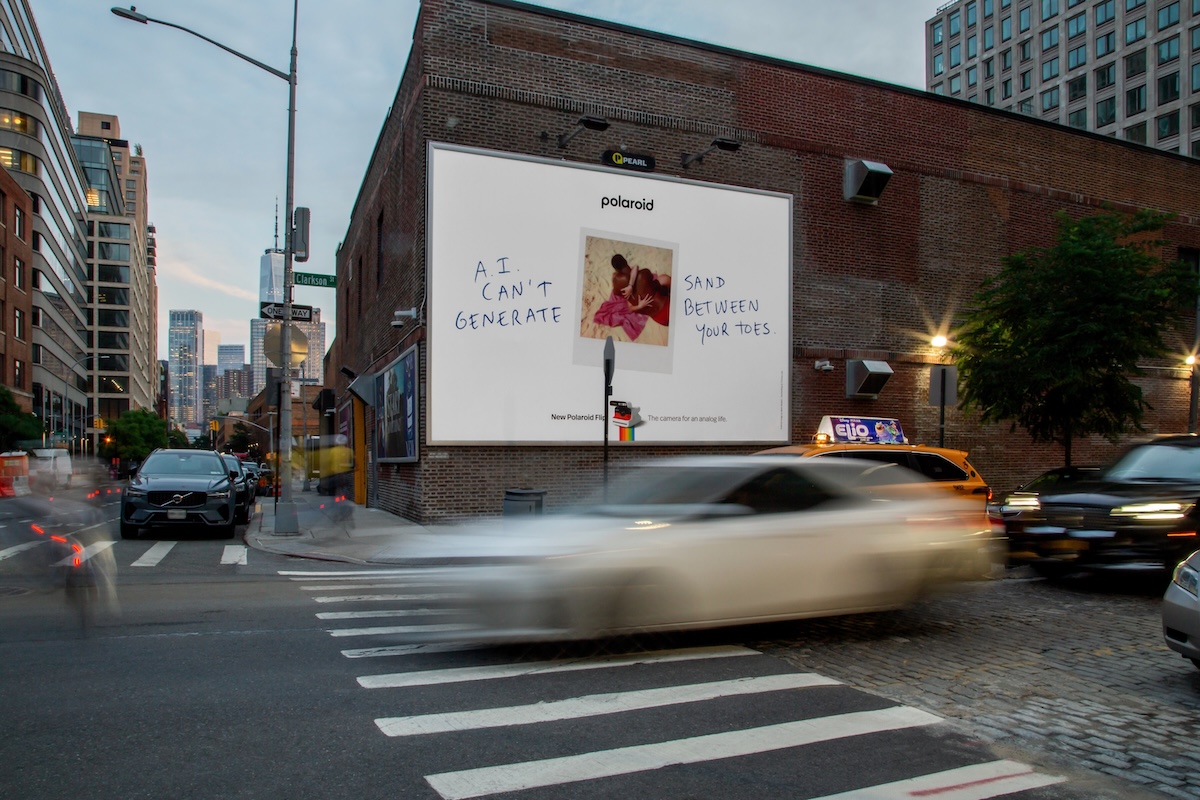
Polaroid put up billboards outside Google’s offices reading “AI can’t generate sand between your toes.”
Which brings us back to Christmas.
It’s advertising’s most sentimental stage, and the place generative AI will be rejected hardest.
Wouldn’t be surprised to see a surge in stop-motion, hand-built sets, and proper credit to the humans involved over the next six weeks.
The human touch is back in fashion. It just costs more than it used to.
We’ll be tracking the best Christmas ads of 2026 as they drop.