How Lucky Generals rebuilt Virtual Insanity’s spinning room for Beefeater 0.0
When Lucky Generals set out to reboot Virtual Insanity for Beefeater 0.0, cutting corners with CGI was never on the table.
In an exclusive interview creative directors Joe Stamp and Tom Prendergast explain why the anniversary film had to be built the same way Jonathan Glazer built the original: nine practical rooms, no visual effects, everything captured in camera.
“We wanted people to watch our film and ask exactly the same question they asked in 1996: ‘How’d they do that?'” they say.
The pair also reveal how far the Jamiroquai connection runs, with many of the hats and props scattered through the rooms pulled straight from Jay Kay’s own collection and planted as Easter eggs for fans quick enough to spot them.
Watch the making-of video below, and read the full chat beneath it.
Did you consider making life easier for yourselves by using a bit of CGI?
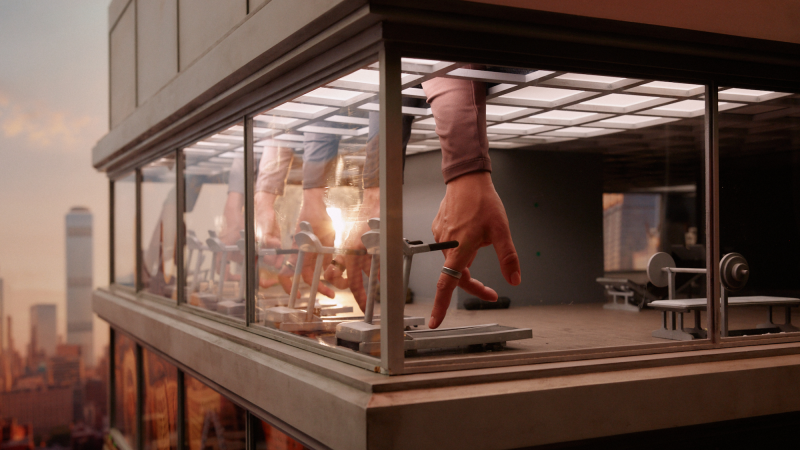
Early on, we realised that if we were going to revisit Virtual Insanity, we had to respect what made the original so amazing, and that was an innovative set build and achieving pretty much everything in camera. People are still talking 30 years later about how it was made. The physicality and mystery is part of its magic. We wanted people to watch our film and ask exactly the same question they asked in 1996: “How’d they do that?” So we built nine practical sets, had multiple moving parts, and created everything in camera. It was definitely harder, but it also became part of the story we were telling.
Why did Virtual Insanity feel like the right piece of pop culture to revisit?
Because it never really left culture. Lots of campaigns borrow nostalgia, but Virtual Insanity still lives in people’s imaginations. Fans continue to debate how it was made, recreate the dance and share it with new generations. It also gave us the perfect metaphor for the brand. If Beefeater 0.0 is about getting more from life, then why should Jay Kay still be trapped in one room? Let’s set him free into more rooms, more experiences and more life.
Were there worries about a fan backlash?
Yes. We had heart palpitations on the morning it went live. When you’re touching something this iconic, fans are always going to hold you to a very high standard. So, before we wrote anything, we immersed ourselves in thirty years of conversations around Virtual Insanity. We wanted to understand what people genuinely loved about it, what they were still talking about and what they would expect us to preserve. That informed everything from the practical filmmaking to the Easter eggs hidden throughout the film. Our ambition became not just to remake a classic, it was to add a new chapter that fans would enjoy discovering.
At what point did someone say, “What if the thing Jay Kay was reaching for was Beefeater 0.0?” – and did everyone immediately know it was the idea?
The funny thing is that the answer was hiding in plain sight. One of the recurring conversations has always been, “What is he actually reaching for?” Once we’d decided that Jay was the right partner, that question suddenly became powerful. It wasn’t just a joke or a visual gag. It unlocked the entire story because it allowed us to start exactly where the original finished. From there, Beefeater 0.0 became the thing that opened up an entirely new world rather than simply appearing as a product placement.
What did Jay Kay bring to the party?
Hats, lots of em. And moves, lots of em. He wasn’t simply the face of the campaign. He choreographed the performance himself, brought bags of energy to the set and was genuinely invested in getting every movement right. He also helped make the world feel authentic. Many of the hats and personal items you see throughout the rooms came from his own collection, so the environments became little love letters to Jamiroquai fans as much as they were sets for a commercial.
Was there anything from the original video that felt almost sacred – something you knew you couldn’t mess with?
The feeling of wonder. We didn’t think it was about preserving individual shots as much as preserving the experience people had when they first watched it. The original made people question what they were seeing. That sense of curiosity and ingenuity felt completely untouchable. So instead of recreating every frame, we tried to recreate that emotional response. Hopefully audiences finish our version asking exactly the same thing they asked in 1996: “How on earth did they pull that off?”
Moderation advertising can easily feel sensible and joyless. How did you make moderating feel like getting more, not less?
We actually tried to stop thinking about moderation altogether. The behaviour is interesting because people aren’t moderating to miss out. They’re moderating with Beefeater 0.0 because it lets them do more. Stay out longer, feel better the next day or simply enjoy more occasions on their own terms.
It’s not about doing less, it’s about getting more. That shift changes everything creatively. Suddenly you’re not making a campaign about saying no. You’re making one about saying yes to more experiences, more spontaneity and more life. That’s exactly what “Get More With 0.0” became.
What’s the one detail, joke or reference you hope die-hard Jamiroquai fans spot before everyone else does?
We’ll leave people to discover those for themselves! One of the joys of making the film was filling the rooms with details inspired by Jay’s world. We knew Jamiroquai fans are brilliant at spotting hidden references, so we wanted to reward repeat viewing rather than give everything away in one watch.
Half the fun is seeing which Easter eggs people find first—and then watching everyone else catch up.
What happened on the shoot that definitely wasn’t in the treatment?
Jay. His personality brought so much to the production that you couldn’t possibly have planned for it. Between takes, he was making drinks, telling stories, talking everyone through the history of different hats and generally entertaining the crew. That energy found its way into the film. The production always had a meticulous plan, but Jay made the world feel lived-in rather than staged, which was exactly what we hoped for.