How Marty Supreme turned movie marketing into performance art
For decades, movie marketing has followed the same well-worn choreography. Red carpet premieres. Late-night chat shows. Hotel room junkets dressed up as “intimate conversations.”
A yawn-fest of over controlled interviews where actors say just enough to sound revealing without risking anything at all.
It’s polite, predictable and increasingly invisible.
That machinery still exists. The problem is that most people under 35 are barely looking at it.
Gen-Z don’t discover films through breakfast TV sofas or broadsheet interviews. They discover them through social feeds, group chats, screenshots, memes and moments that feel unplanned. In that landscape, traditional film promotion often feels less like culture and more like noise.
Which is why the marketing for A24’s Marty Supreme has landed so loudly.
What is Marty Supreme?
Directed by Josh Safdie and starring Timothée Chalamet, Marty Supreme (out Dec 25) is a sports-comedy drama loosely inspired by the life of American table tennis legend Marty Reisman. Chalamet plays a fictionalised version of Reisman, Marty Mauser, an obsessive outsider chasing greatness in post-war New York.
Chalamet is joined by a slate of A-list actors for the film – Gwyneth Paltrow, Fran Drescher, Odessa A’zion, and Tyler, the Creator, among others.
On paper, it’s not obvious box office catnip. A period sports film about competitive ping pong, with no franchise IP and no cinematic universe dangling off the side.
The kind of project that, in another era, might quietly premiere at a festival, earn great reviews and then struggle to reach anyone beyond cinephiles.
Instead, it’s become one of the most talked-about releases of the year.
The A24 Factor
That’s partly because the studio behind it is A24, a company that has quietly rewritten the rules of independent film over the past decade. Founded in 2012, A24 built its reputation on taste, restraint and a fiercely loyal audience. It didn’t just release films; it lovingly curated them.
They’ve built a cult-like following by using innovative, low-budget tactics that appeal to their audience, while turning their brand into a signal of uniqueness – via a membership club.
But Marty Supreme represents something different even by A24 standards. With a reported production budget of around $60 million, it’s the studio’s biggest swing yet.
And rather than outspending the majors on TV spots and billboards, A24 has leaned into the one thing money can’t easily buy: cultural momentum.
The result is a campaign that looks less like advertising and more like a rolling experiment in attention.
Breaking the Formula
Instead of flooding the market with trailers, A24 has deployed a sequence of moments designed to be discovered, shared and debated.
The campaign kicked off in October, when Chamlet posted a hype video starring himself being bombarded with balls and intriguing dudes wearing ping-pong-ball helmets.
A few days later a blimp with giant black typography reading “Marty Supreme” appeared above multiple U.S cities.
There’s been surprise screenings and a streetwear pop-up announced less than a day in advance that spirals into crowds so large the police shut it down.
Limited-edition jackets that feel less like merch and more like trophies, instantly flipping into resale mythology.
GQ’s fashion expert Samuel Hine pondered if the Marty Supreme jacket might be “the definitive garment of 2025.”
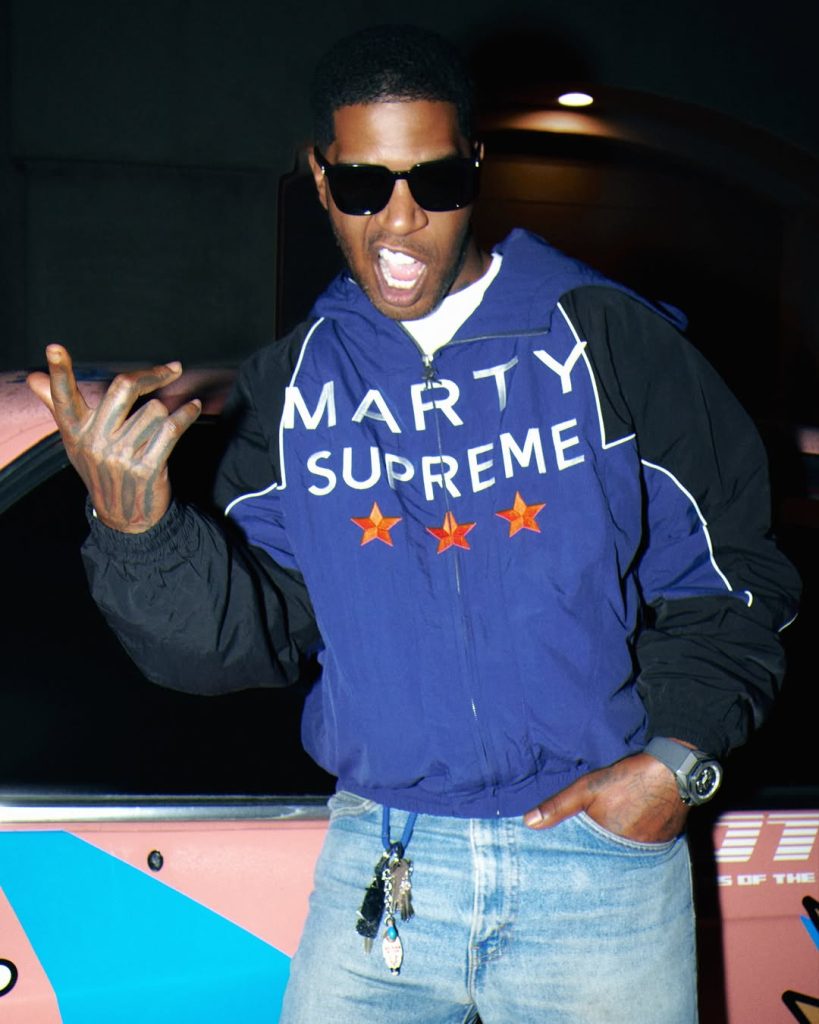
None of this feels accidental, but crucially, none of it feels sanitised either.
It borrows tactics from fashion drops, music culture and internet spectacle rather than traditional film marketing playbooks.
secured the goods pic.twitter.com/rASuR602DA
— iana murray (@ianamurray) December 13, 2025
The campaign even mocks itself. An 18-minute spoof Zoom call, framed as a leaked marketing meeting went viral and features Chalamet pitching increasingly unhinged ideas.
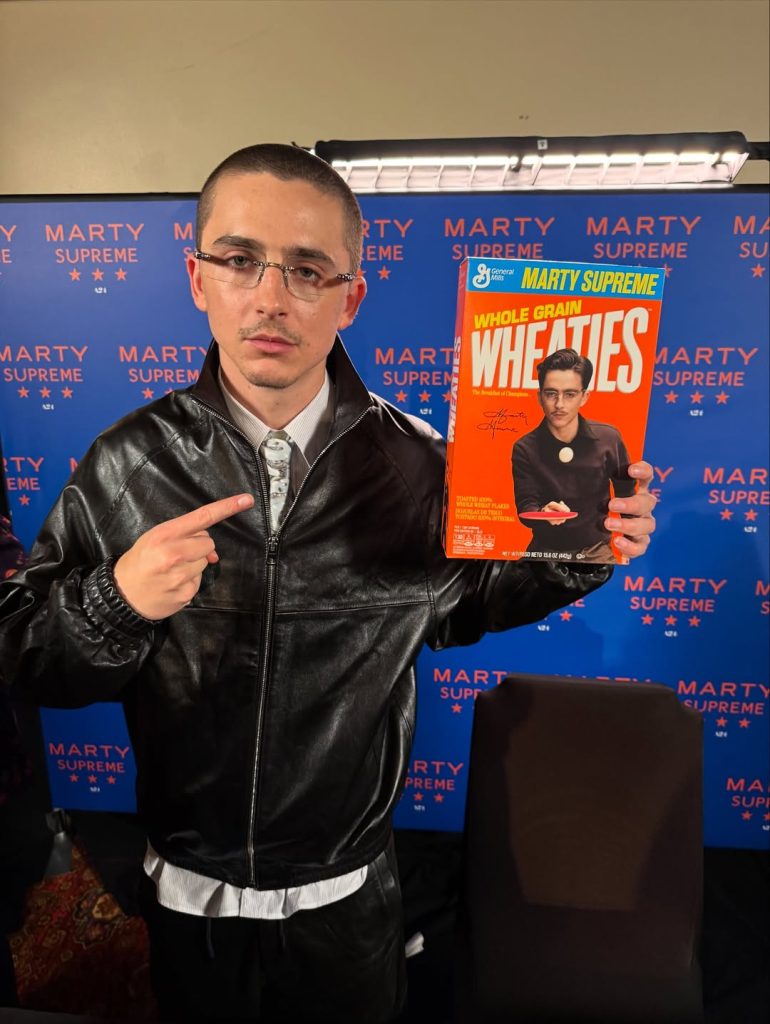
…and one of them happened as Marty adorned a box of Wheaties – as space usually reserved for regular sports stars.
The Chalamet Effect
A large share of the credit belongs to Timothée Chalamet himself.
It’s rare for talent at his level to commit this fully to promotion. Most stars appear, perform their obligations, then disappear. Chalamet has done the opposite.
He has made himself the connective tissue of the campaign, not just its face.
He shows up. In person. Unexpectedly. He posts. He teases. He plays along with the absurdity rather than standing above it. He allows the marketing to blur into performance, and in doing so, turns promotion into something fans want to watch, not skip.
The campaign lives on social where younger audiences already are, rather than dragging them back toward legacy media channels they’ve largely abandoned.
Why This Works Now
The broader context matters. The theatrical box office is still recovering. Streaming has trained audiences to wait.
Non-franchise films, even star-led ones, routinely struggle to justify a trip to the cinema.
In that environment, awareness is not enough. A film has to earn relevance.
View this post on Instagram
Marty Supreme does that by creating conversation before consumption. It gives people something to talk about, screenshot, parody and argue over before they’ve seen a single frame.
The marketing doesn’t just announce the film; it builds a world around it.
Like sound track listening events.
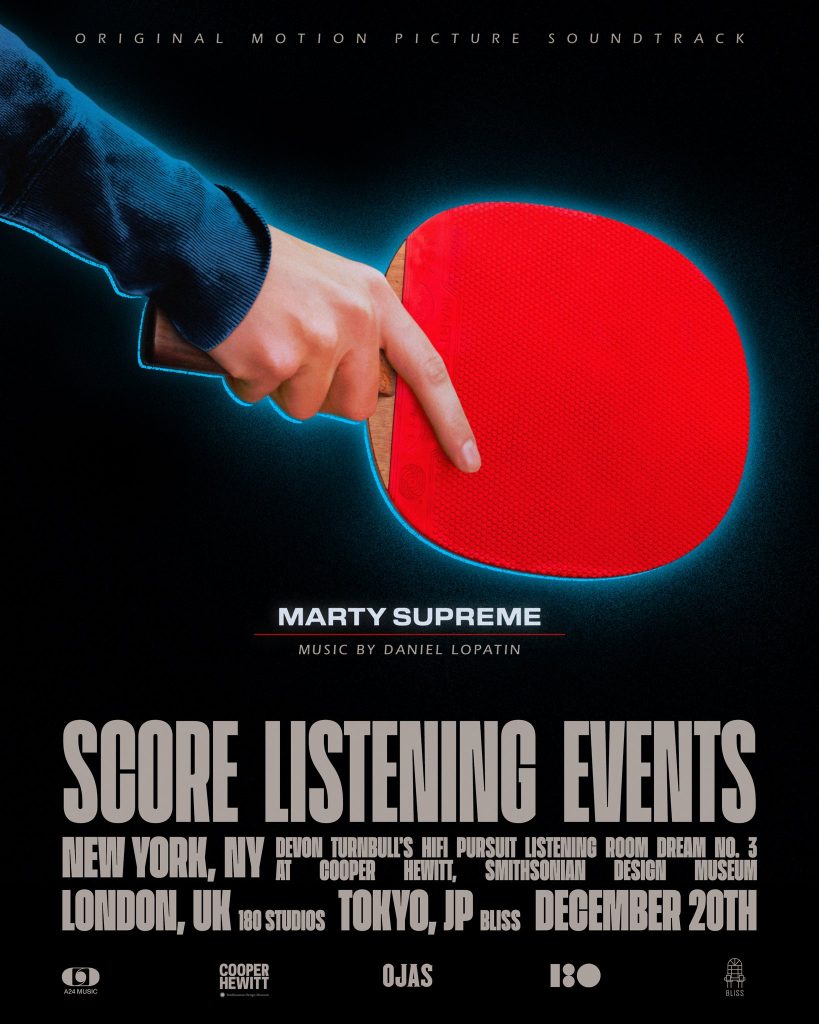
This isn’t entirely new. Hollywood has always flirted with spectacle. What’s different now is the speed and scale at which these moments travel, and the degree to which they’re designed for social transmission rather than mass broadcast or carefully controlled promo assets.
Marty Supreme Boxing Day ?? pic.twitter.com/lONNK2aQ9Y
— Marty Supreme (@martysupreme) December 15, 2025
As one industry analyst put it, the showmanship has always been there. What’s changed is virality.
A Campaign About Greatness
There’s also a thematic alignment that feels unusually tight. Marty Supreme is, at heart, a story about obsession, ambition and the pursuit of greatness. The campaign mirrors that energy. The relentlessness of the rollout.
Even the self-parody plays into the idea of someone striving, pushing, overreaching.
While staying very on-brand with orange – which Chalamet likened in the parody Zoom call to the signature pink of the 2023 Barbie film,
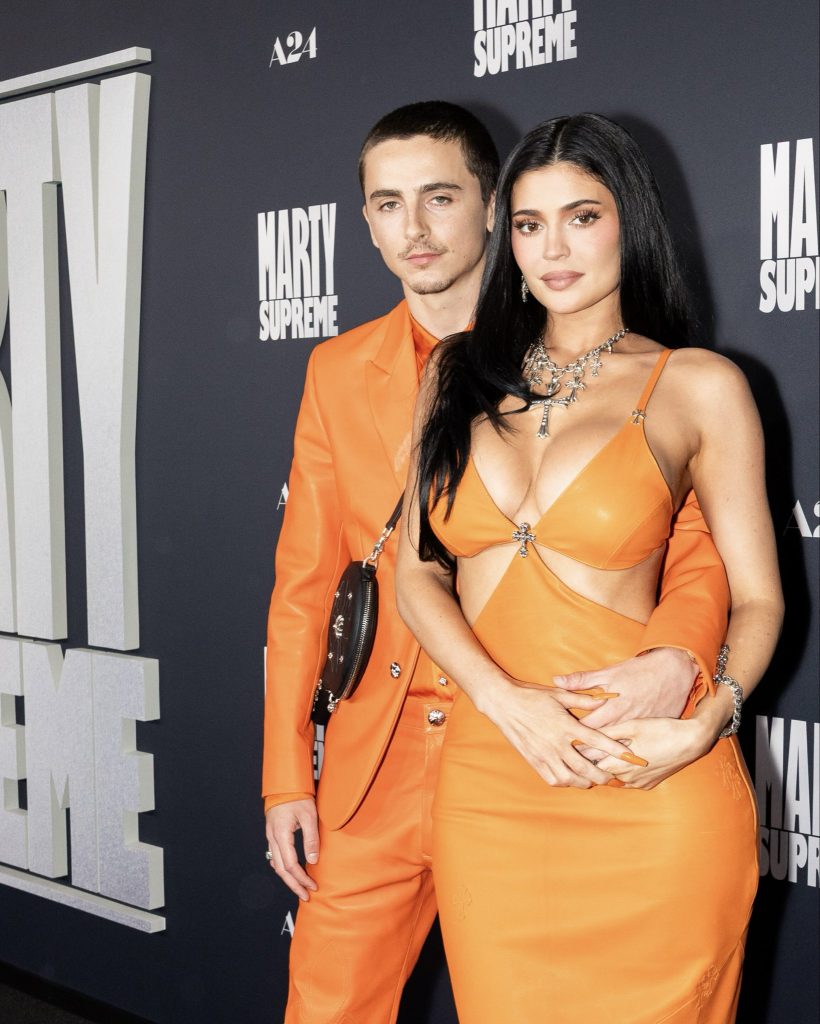
Marty Supreme hasn’t reinvented movie marketing
It has simply accepted reality faster than most studios.
Audiences don’t want more ads. They want moments. They want stories that unfold in public. They want to feel like something is happening, not being sold to them.
By embracing that, A24 (and kudos to head of creative marketing Graham Retzik) with Chalamet have turned a niche period sports film into a cultural event before it’s even properly opened.
Whether it becomes a box office juggernaut or not, the campaign has already done something more interesting.
It’s made movie marketing feel alive again.