The Famous Q&A with ~ Kristine Segrist
Kristine Segrist is the Global Head of Consumer & Product Marketing at Canva – a platform that’s become one of the most-used creative tools on the planet.
Kristine has spent two decades marketing for some of the world’s biggest names including Netflix, IKEA and Meta.
We spoke to her about AI, bold ideas, and why the best campaigns pass the “mom test.
Canva has gone from a design tool to a global creative platform. What is the biggest misconception people still have about the platform?
That Canva sits only on the “creative” side of the equation, rather than at the intersection of creativity and productivity. When some hear “design tool,” they still think of simple social graphics or templates. But today, more than 265 million people each month use Canva to run campaigns, build brands, collaborate with teams, and create content at scale. We’ve evolved from a design tool into an end-to-end creative platform where work gets done.
One of the most remarkable shifts in design we announced recently has been moving from a design platform with AI tools to an AI-powered platform with design tools. For the first time, whether you’re starting from a blank page or need support midway through a design, you now have a conversational creative partner built directly into your workflow. You can describe a goal, share a rough idea, or start with a simple prompt, and Canva’s AI tools now help bring it to life across presentations, docs, videos, social, websites, and more, all in one place.
Canva has put creativity into the hands of millions of non-designers. What does that change about how brands, agencies and marketers think about making work?
It changes where creative work starts. The old model was often: brief to designer to output. Now, any marketer can go from an idea to a campaign approach in a single conversation.
For brands, that means creativity and brand building no longer sit with just the marketing team. More people across an whole organization can now create high-quality, on-brand work without the traditional bottlenecks. And for us, it shifts where the true value lies. It’s less about production but more about having bold ideas, strategy, and creative thinking. The question is no longer “do we have the resources to make this?” but “is this the right idea?”. That creates a fundamentally different creative culture which is really exciting.
Canva is used by everyone from solo creators to major global brands. How do you build a marketing strategy that speaks to such a broad audience without becoming generic?
We start with the common thread that connects our community around the world. Whether you’re a solo creator, a teacher, a small business owner, or a global enterprise, everyone is trying to communicate ideas faster, more visually, and with greater impact.
The interesting challenge we have is building a brand that can flex across different audiences, use cases, and cultures, while staying grounded in the same belief that design and creativity should feel accessible and empowering to everyone. That’s why our campaigns are deeply local and tailored.
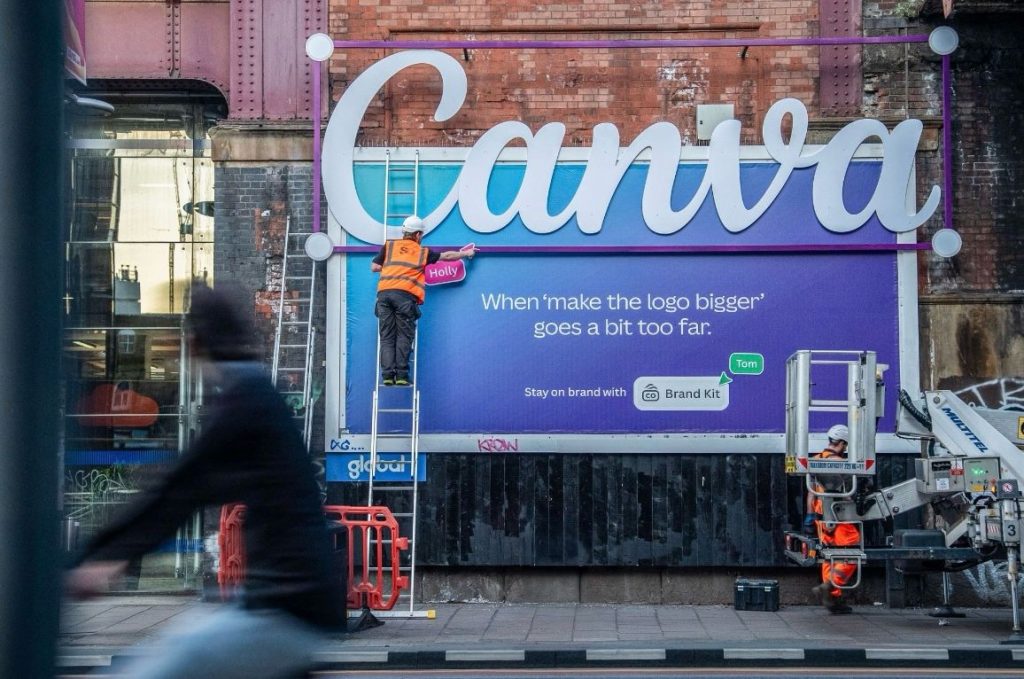
For example, our recent Brazil campaign celebrated the resilience and imagination of SMBs, while in the US, we launched a mass-market campaign showing how, with the right tools, even the most unexpected idea can become the next big thing. Different audiences, but the same brand truth at the heart.
What’s exciting you most in your role right now?
What’s exciting me most right now is helping our team of more than 500 marketers continue unlocking bold, creative work as we grow – without losing what makes Canva, Canva.
We talk a lot about balancing the Canva “magic” and the “method.” The magic is the principles and philosophies that make our brand distinct and that we want to protect as we scale, while method is the tools, playbooks, and ways of working that help us achieve our huge goals.
Keeping our team connected to the Canva magic while ensuring they have everything they need to do their best work is one of the most rewarding parts of my role.
Share a past campaign you’re proud to have been part of.
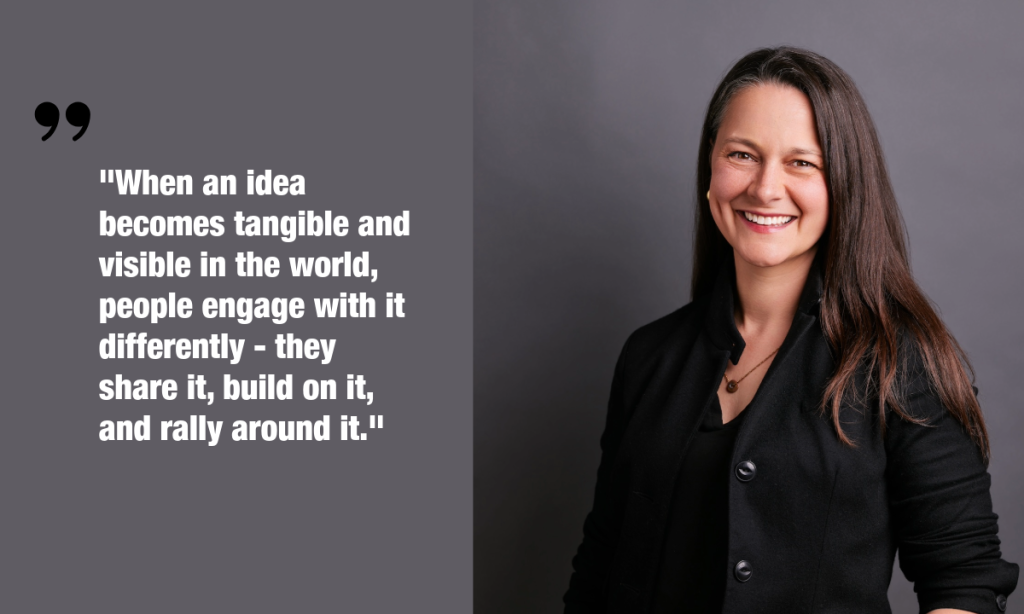
One campaign I’m especially proud of is our recent US brand campaign, “The Thing That Thing That Makes Anything A Thing.” It was built around a simple insight: when an idea becomes tangible and visible in the world, people engage with it differently – they share it, build on it, and rally around it.
At its core, the campaign was about Canva’s role as a creative partner: bridging the gap between inspiration and execution, and turning even the smallest spark into something real, shareable, and impactful.
We brought this to life through “The Squirrelites” – a playful squirrel fandom movement designed to demonstrate how even the most niche idea can build real momentum when expressed in a bold, visually compelling way. It started with a giant squirrel statue appearing overnight in Brooklyn Bridge Park, then quickly snowballed into squirrel tours, buskers, artists, merch stands, influencers, and unbranded billboards spreading a mysterious squirrel-inspired movement across NYC.
Last week, we revealed Canva was behind it all with a film following a woman whose chance encounter with a squirrel evolves into a full-blown squirrel fandom movement – transforming inspiration into real-world creation, from posters and social posts to merch, and ultimately into a community built around it. The campaign was about showing how, with the right creative tools, everyone has the ability to bring their ideas to life and create real impact.
What’s one thing great agencies do that average ones don’t?
Great agencies know how to make an idea feel both strategically sharp and instantly understandable. The best work usually looks simple on the surface, but there’s a really strong strategic backbone underneath it.
We often talk about the “mom test” at Canva – if you showed the idea to your parent, sibling or a friend outside of the industry, would they immediately get it, smile, and understand the point? The best agencies consistently create work that passes that test. It’s smart without feeling complicated, culturally relevant without trying too hard, and creatively bold while still being incredibly clear.
What’s the best piece of career advice you ever received?
There are a few pieces of advice that have really stayed with me over the years.
One is: keep the main thing the main thing. In a world full of distractions competing for your time and attention, it’s a reminder to stay focused on what matters most.
I also had a mentor who talked a lot about the importance of forward momentum for a team. Keep moving forward. Take the next best step. Progress often matters more than perfection.
And finally, I’ve always believed in a servant leadership mentality: hire people who are better than you – often with different perspectives and lived experiences – then create the right environment for them to thrive. Remove blockers, build trust and psychological safety, and give great people the space to shine.
One piece of advice for someone considering a career in marketing?
One piece of advice I’d give is don’t be afraid to challenge convention. When I think about what’s made Canva such a breakout brand, a big part of it is the willingness to rewrite the playbook and zag when everyone else is zigging.
But the other half of that is staying deeply grounded in your brand truth. The best marketing feels unexpected, resonant and impossible to ignore, while still being unmistakably authentic to who you are. That balance is where the magic happens.
Who has had the biggest influence on your early career?
The women leaders who have lifted me, advocated for me, and shown me what is possible. People like – Carrie Frolich, Marla Kaplowitz, Sarah Personette, Rebecca Van Dyck, Kate Rouch and Samantha Wu – who taught me to be brave and consistently dare to ask “why not me?”
A marketing or business book you’d recommend?
I would actually just encourage people to read all types of books – especially history, fiction and memoirs. For example, right now I am reading James. When you are in a creative space, ideas truly can come from anywhere – but I find it is important to keep fueling your tank by taking in content that is not necessarily work-related – but still sparks your imagination – like novels, art, music, movies. It is like a little ideas bank that can surface new ways of thinking and interesting connections when you least expect it.
Your favourite overused mantra, motto or saying?
We got this.
If you weren’t doing this job, what would you be doing instead?
I know it is a very different direction, but think it would be interesting to be a dermatologist! I also love kids, so maybe a teacher or a coach.
see also > Creative chaos meets Canva in brilliant OOH campaign