Marketers are finally getting the brand measurement tool they always needed
partner post
Brand building works. That’s not the debate. The debate is whether you can prove it, and prove it fast enough to actually do something about it. Tracksuit is the answer modern marketers have been waiting for.
There’s a question that’s haunted brand marketers for decades: we know brand building works, so why is it so hard to prove?
It’s not a new problem. The research has long been clear that investing in brand awareness and consideration creates the demand that performance marketing then converts. Brand is the engine; performance is the fuel injection.
But without the data to show that in real time, brand investment has always required a leap of faith: spend the money, wait months, and hope the numbers eventually tell a decent story.
That’s the gap Tracksuit was built to close.
The company was co-founded by James Hurman, a well-known figure in marketing effectiveness circles, on a fairly straightforward premise: rigorous, continuous brand measurement shouldn’t be reserved for multinationals with six-figure research budgets.
The tools exist. The methodology is sound.
So why shouldn’t a mid-market challenger brand have access to the same quality of insight?
The short answer, until recently, was cost and timing. Traditional brand trackers were built for enterprise insights teams: annual PDF reports, £100k+ per wave, delivered long after the moment to act had passed.
By the time the data arrived, the campaign was over, the budget was spent, and you were essentially reading a post-mortem.
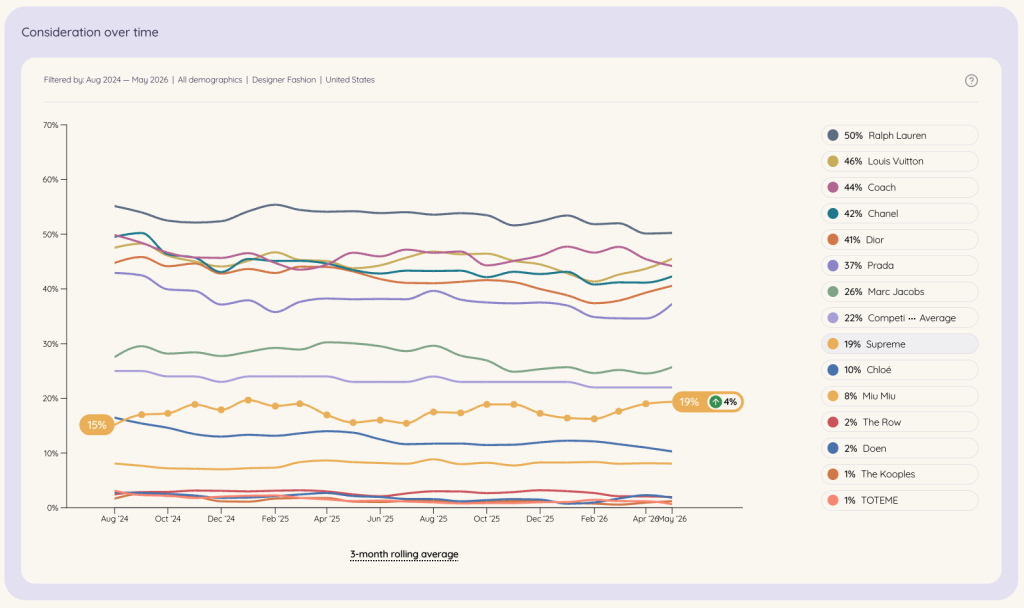
Tracksuit works differently. It’s always-on, updating monthly, and lives in a dashboard that anyone on the team can open and actually understand: no research background required.
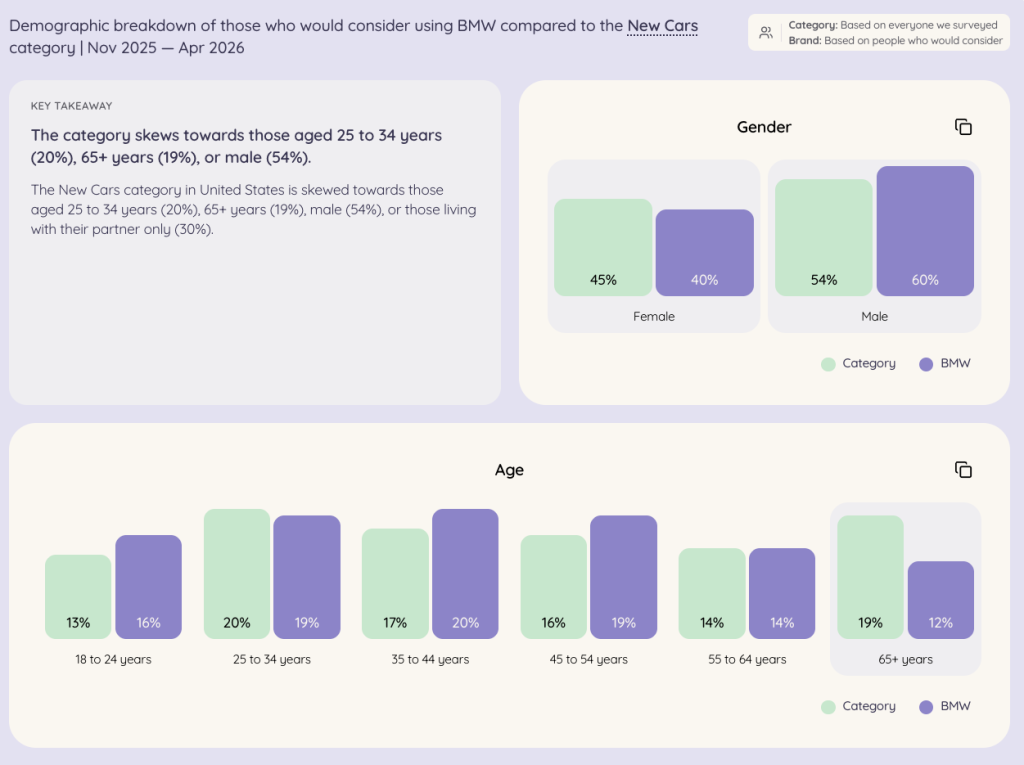
Awareness, consideration, usage, preference, competitive position: the metrics that matter, tracked continuously, so you can see changes as they happen rather than months after the fact.
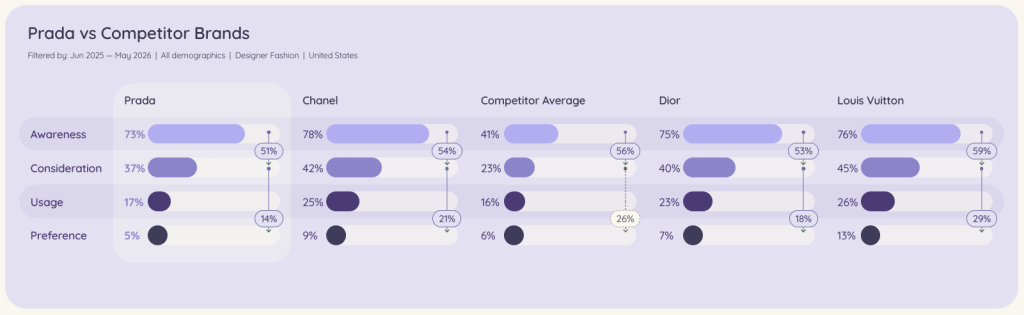
For marketers, the practical difference is significant.
When a campaign goes live, you don’t have to wait until next year’s tracking wave to know if it’s landing. When a competitor starts gaining ground, you see it mid-flight. And when it’s budget season and you’re in front of a CFO trying to justify brand spend, you have a trend line — not an anecdote.
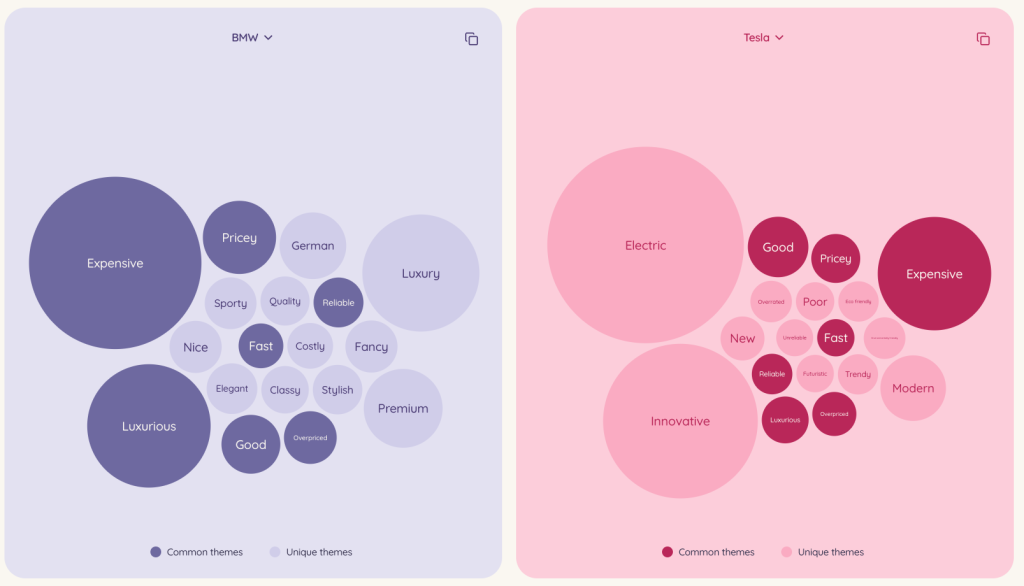
For agencies, there’s a different kind of value. When client and agency are looking at the same live data, conversations get sharper. Briefs are grounded in what’s actually happening in the market.
And the strategic recommendation you’re making isn’t just instinct: it’s backed by evidence about what the brand actually owns in the minds of category buyers.
None of this requires a dedicated research team or a six-month onboarding process.
Setup takes 30 days from contract to first data. From there, the picture builds over time: and that trajectory, rather than any single snapshot, is where the real strategic value sits.